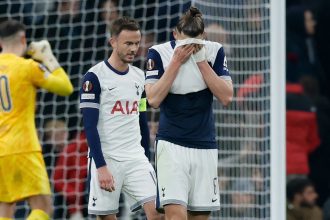
This week sees the Quarter Finals of the Champions League, it is a huge occasion for European football. I have spent much of this season marvelling over the performances of Tottenham, in what has been a remarkable first season in European competition. But, for a moment, I want to look back one of the great players to represent English sides in European football, a player that I don’t believe recieves enough credit, John Wark.
Frustatilngly for me, Wikipedia has chosen the following quote to summarise Wark; ‘Wark was not a “supremely talented player” but … one who espoused team spirit’. I think that is nonsense, and here is why.
I find John Wark an extremely interesting player. He started his career as a centre half and ended up playing in midfield, but throughout his career he had a phenomenal goal scoring record. In his first spell at Ipswich, he scored 134 goals in 266 appearances. In his prime he was a midfielder who achieved the feat of being top goal scorer both in domestic football and Europe, and that is where my interest lies today.
John Walk has an incredible strike rate in European football. In 1980/81, at 22, he helped his Ipswich Town side to lift the UEFA Cup. He scored in both legs of the final which took his total to 14 goals for Ipswich in their European Cup run that season. He was famed for his ability to arrive late in the box and finish accurately. The end of the year saw him collect the PFA Players’ Player of the Year and also the Young European Footballer of the year. The latter is now called the Bravo Award.
The Bravo award, like its senior the Ballon D’Or, features only the very best players European football has produced in the last 30 years; Van Basten, Maldini, Giggs, Ronaldo, Cristiano Ronaldo, Messi; they are all on it. That is a testament to how good a player John Wark was, especially in Europe. I urge you not to believe Wikipedia.
[ad_pod id=’unruly’ align=’right’]
After this rise to fame at Ipswich, John Wark transferred to the golden Liverpool side of the ’80s. It was a high profile move as he was signed to replace the talismanic Graeme Souness, who had left for Sampdoria. In his first full season at Anfield, Wark and his Liverpool team mates reached the final of the 1984/85 European Cup, where they lost to Juventus. On route to the final he scored a total of 5 goals in 9 games. Therefore, after 27 appearances in Europe for both Ipswich and Liverpool, Wark had amassed a stunning 22 goals. In that season, Wark finished as Liverpool’s top goals scorer with 27, including 3 hat-tricks.
Sadly for Wark his next season was tarnished by injuries, including a broken leg. For this reason he missed out on playing for Scotland in the World Cup of Mexico in 1986 (managed by Sir Alex Ferguson). When he returned to fitness, Jan Molby had secured his place in Liverpool’s midfield.
So in 1987/88, Wark moved back to his former club Ipswich, from there he played a solitary season at Middlesborough before returning to Portman Road, where he stayed until his retirement. Wark carried on playing for Ipswich as a centre half until he was 40. His goal scoring ability had been due to his wonderful reading of the game. For this reason he was able to fit seamlessly into the role of a centre half towards the back end of his career.
This ability to be in the right place at the right time was summed up by an all-time Liverpool legend Bob Paisley. I think this quote says it all, “most footballers have a sense of where the ‘right’ place is, but few can sense when the time is ‘right’. John Wark had great timing. You could set your watch by him.”
If you want to follow Joe on twitter, you can do so @joeaustin8
[poll ]